
NatureScot's licensing system may pave the way for a return to fox hunting
It's asking for feedback on the scheme... but not from you or me

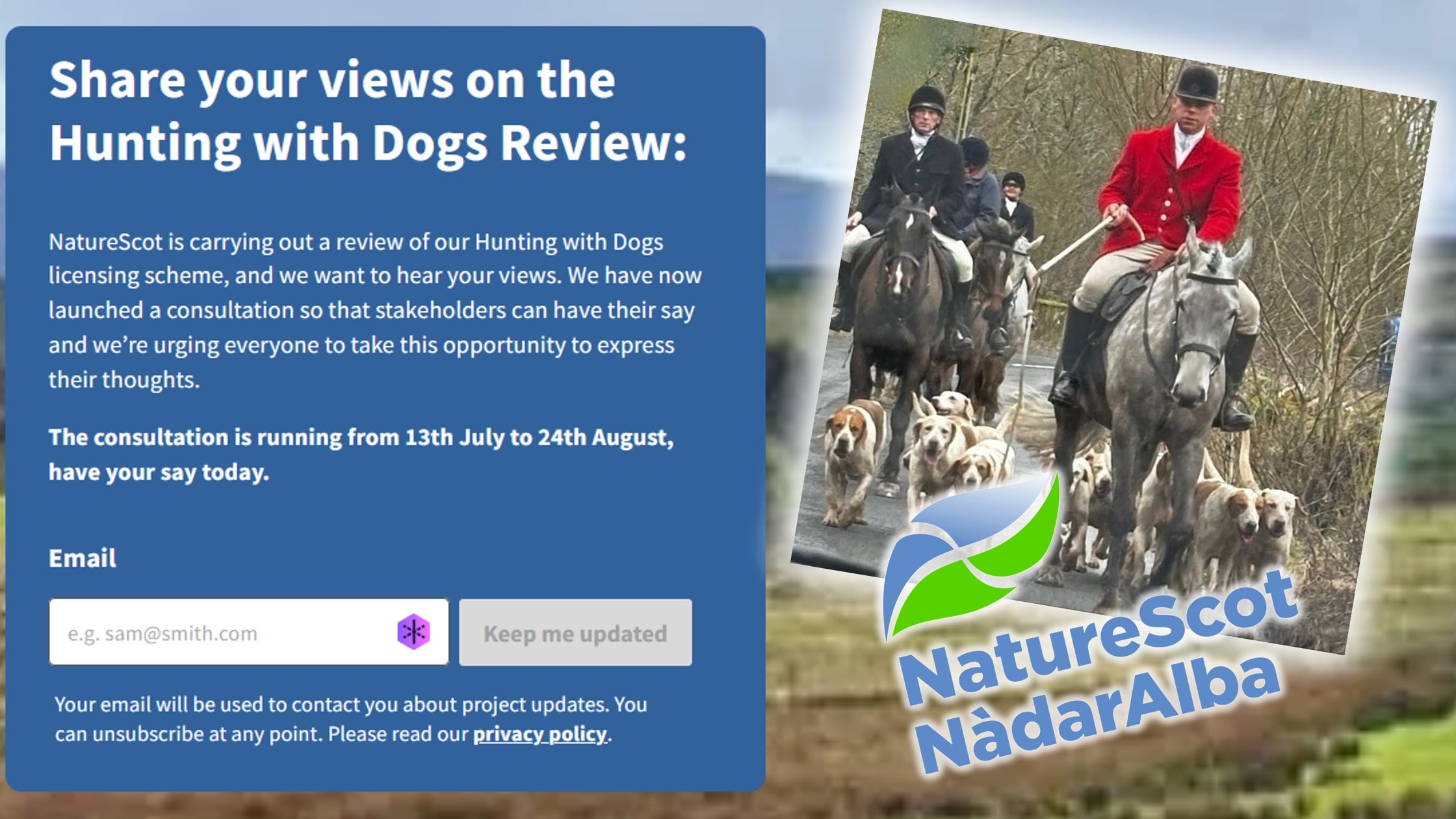
NatureScot is asking for feedback on its system for licensing hunting with dogs. The survey is for those “who have applied for licences” or who “have been involved in the introduction to the [Hunting with Dogs] licensing scheme”. Local sabs are concerned this is providing cover for relaxing a law that Scottish hunts are already exploiting.
On 13 July, NatureScot launched its Stakeholder Feedback for 2026, and it will run until 24 August. This brief questionnaire states it is “keen to find out about peoples’ experiences of applying for a HWD [Hunting with Dogs] licence” as part of its commitment to a Shared Commitment to Wildlife Management policy.
In practice, this means the survey is seeking feedback from hunts on how easy they’ve found getting a licence. In particular, the Scottish Countryside Alliance response guidance for the survey makes it clear that it is providing leverage for what it calls “traditional hunts” to push back on current legislation. In particular, it uses three of its six points to challenge NatureScot’s approach to ‘cover’, i.e. areas where a fox may hide.
For example, point 4 states:
NatureScot are currently only allowing the flushing to be from cover. Under licence, dogs can “search for, stalk or flush from cover”, which are three separate activities which can be undertaken individually or in combination. The activity licensed does not need to be within cover. Searching for and stalking can take place outside cover.
This appears to be an attempt to enable fox hunting to take place across open ground. When the HWD Act was introduced, NatureScot intended licensing conditions to confine ‘pest’ control activity to flushing from cover. However, by wrenching searching and stalking away from flushing, it would legalise the hunting of a fox across open ground by hounds up until the point the fox is shot (or, less commonly, taken by a bird of prey).
Legislation and loopholes
Whilst this point is very much within the nooks and crannies of the law, it’s exactly the type of technicality that creates exploitable loopholes. When the HWD Act was brought in, then-Environment Minister, Màiri McAllan, said:
This bill is about closing those loopholes, preventing others from opening and finally ending illegal hunting with dogs in Scotland.
Yet time has proven this wrong. Glasgow Hunt Sabs, who initially raised concerns over this survey with Protect the Wild, pointed out that some hunts in Scotland have already exploited loopholes in the legislation:
Although trail hunting is banned in Scotland the word ‘drag’ easily replaces it, which is legal if done correctly. The Jed Forest has exploited this loophole and given a show of ‘drag’ hunting while hunting in a traditional way
The Jed Forest is currently facing six charges of illegal hunting. Glasgow Hunt Sabs said the hunt exploits the law by:
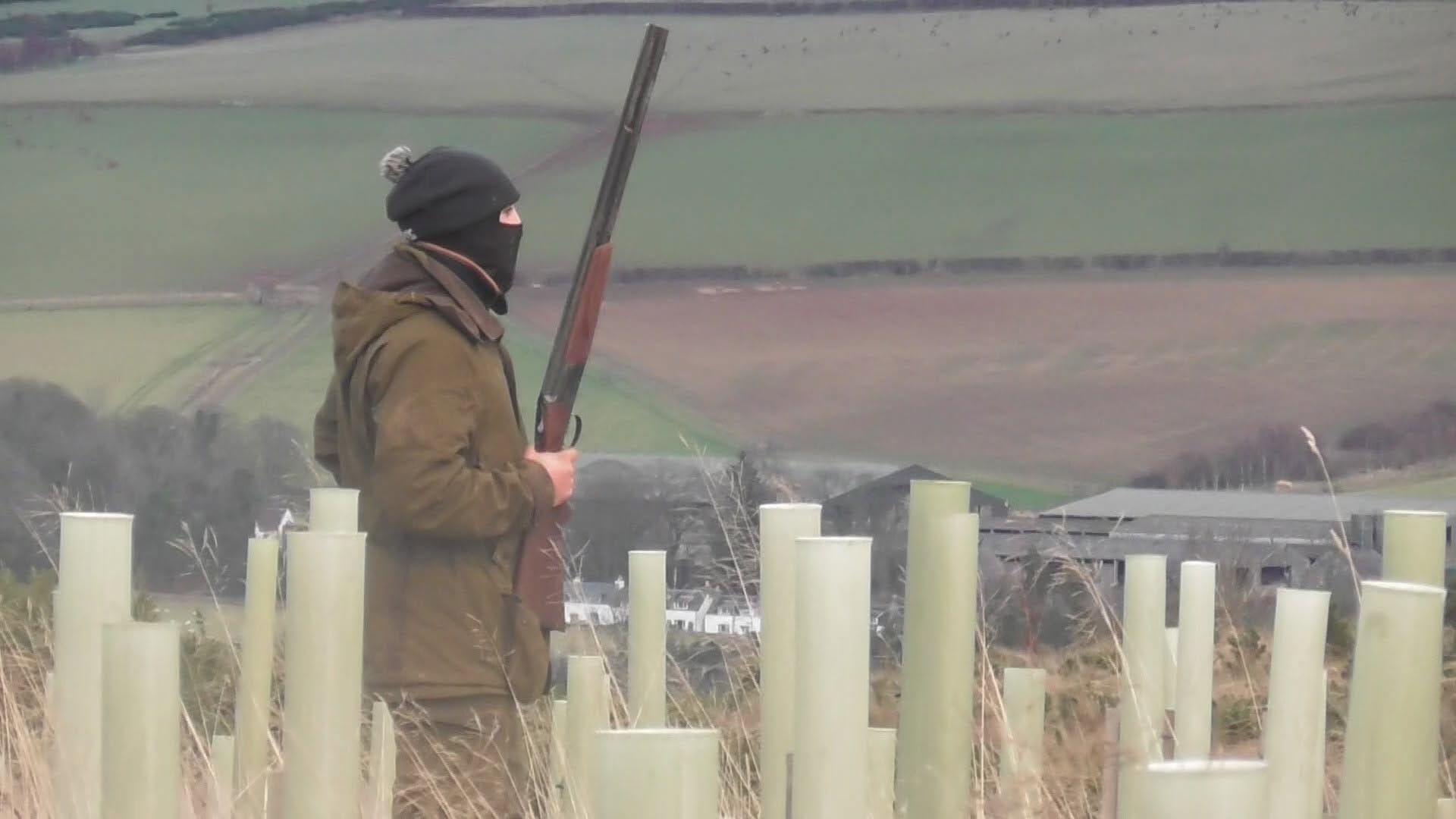
hunting in a traditional way, e.g., surrounding a covert, where foxes take refuge, using a full pack of foxhounds. When they know they’re being watched, the pack is put away in a hound truck and they then continue to hunt for the remainder of the day with 2 hounds, flushing foxes to waiting guns.
The Jed Forest Hunt is not licensed by NatureScot. Instead, it exploits the lack of legislation on drag hunting. However, licensed hunts are no less devious.
Glasgow Hunt Sabs are instrumental in a case of illegal hunting by the Lauderdale Hunt. As the group’s post about the case highlights, at the time the chargeable offence was committed, the Lauderdale Hunt was licensed by NatureScot under the HWD Act. It’s this licensing that the current survey is reviewing.
A tale of two surveys
This isn’t the first survey conducted for the licensing process. In fact, as the government’s website states, it committed to annual reviews of the process for the first five years of the new law.
NatureScot has published its own analysis of previous years’ surveys that suggests something very different from claims made by the Countryside Alliance’s guidance.
In 2023/24, for example, 72 applications were received and 43 licences issued, a 60% approval rate. By 2024/25, that had risen to 77 issued out of 89 applications (87%), whilst refusals fell from 27 to just six. This is not a scheme “utilising frustrating tactics” to keep licences “difficult to attain and retain”, as the Countryside Alliance claimed. NatureScot's own figures show it approving almost nine in ten applications by year two.
The analysis also highlights that the issue of cover has been present since the start. NatureScot maintained the statutory definition "is clear", but its report also shows two licences were amended after compliance visits to include areas of cover that had originally been refused on application. In these cases, NatureScot revised its own calls in the applicant's favour once it saw the ground. The Countryside Alliance’s claims that the regulator is applying an unlawfully narrow reading are therefore highly questionable when NatureScot’s own record shows it is loosening, not tightening, definitions of cover when challenged.
The 2026 review is the third year that feedback is required and the Countryside Alliance’s guidance continues to push the same points that have appeared in response to previous consultations. What’s different this time, though, is that we have two years’ worth of information on how hunts are abusing legislation and, as outlined, how they are pushing to surreptitiously undermine legislation.
Opening up the cracks
One glaring omission from this and previous surveys, though, is whether applications are on behalf of people associated with traditional fox hunts.
Glasgow Hunt Sabs told Protect the Wild that:
No traditional fox hunting pack should ever be issued with a license to hunt foxes as, of course, they will exploit the legislation and carry on as always. [But] As part of the licensing process, the applicant doesn’t have to declare whether they’re connected to a traditional fox hunt or not.
This seems to be a huge oversight in the application process.
NatureScot’s analysis of previous years doesn’t mention such distinction at all. The scheme is scoped entirely around fox control, with no data collected on whether licence-holders have any connection to a traditional hunt.
Given the Countryside Alliance’s guidance on the survey making explicit a desire to separate searching and stalking from flushing, it seems obvious the pro-hunting organisation is trying to open up wiggle room for hunting with hounds in Scotland. And because the survey stipulates that only those involved with licensing can respond whilst also not requiring respondents to declare their affiliations, it creates a situation that could see an already flawed law weakened rather than strengthened in its attempts to protect wildlife.
Glasgow Hunt Sabs made this clear, saying:
The licensing scheme needs more than a review. The current legislation is not working and requires all loopholes, that are clearly being used to continue to hunt, tightened and removed where needed.
Images of Jed Forest huntsman and gun are courtesy of Glasgow Hunt Sabs.
Campaigners and hunt saboteurs have spent more than twenty years fighting the trail hunting loophole in Engand and Wales. But as the Scottish example shows, drag hunting may very well replace trail hunting as the next loophole. We cannot spend another twenty years fighting drag hunting.
With our handy tool, it takes just a few seconds to demand a ban on drag hunting. Click on the button below.
FFS, why on earth can’t the politicians be trusted to stop fox hunting in Scotland once and for all. To not seek to identify if a license applicant is connected to a fox hunt is simply stupid and negligent. 😡
This absolutely cannot be allowed to happen😡😡